
on silence
blanks and gaps

CW: This post contains descriptions of PTSD related memory loss. Please read with care.
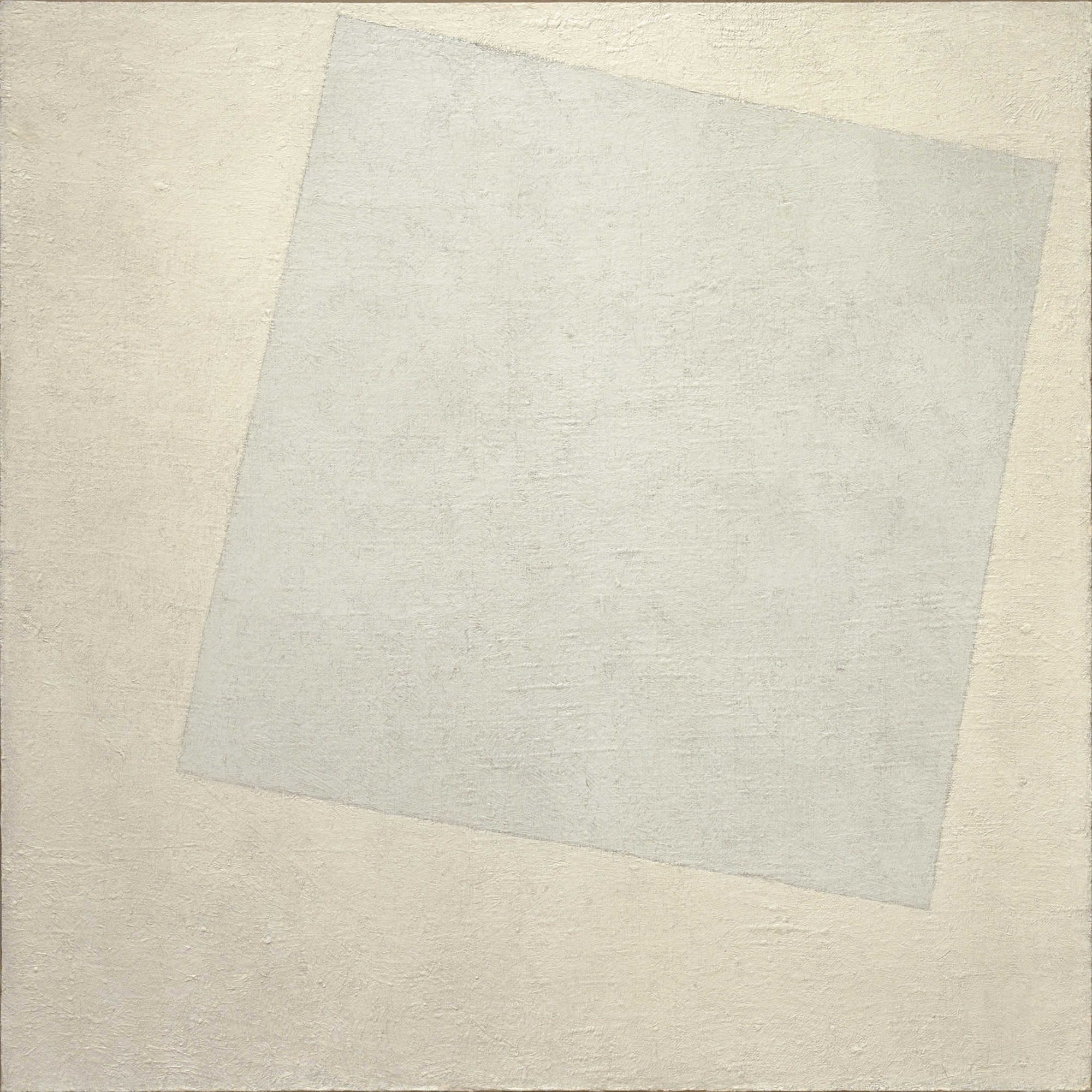
So far as he is serious, the artist is continually tempted to sever the dialogue he has with an audience.
—Susan Sontag, “The Aesthetics of Silence,” Styles of Radical Will
Silence is so accurate.
—Mark Rothko1
Everything is back to zero.
—Pierre Bourdieu, “The Negative Intellectual,” Acts of Resistance: Against the New Myths of Our Time, trans. Richard Nice
What can I tell you about this next chapter, which is not even a chapter at all, but more of a transmission coming over on a channel that will go silent again, at the end of this installment, then pick up again with the next broadcast, and on like that, in alternating silences and transmissions, for whatever span of time, predetermined or otherwise, until of course, inevitably, there comes a final transmission—whether planned or accidental remains to be seen—followed by that last interminable silence.
This mustn’t come as a shock to you, or did you think I’d live forever? And then, disregarding even mortality, there is the (not at all improbable) likelihood of writer’s block—or, more accurately, notetaker’s block. Not to mention mental or physical incapacitation, incarceration, wildfires, earthquakes, world wars, rolling blackouts, internet outages and innumerable other unforeseen crises. Statistically, it’s somewhat of a miracle to be still here, marking up pages in pen or pencil like tracks in fresh snow. This word here, and that one, minute somethings, set against nothing’s infinite expanse. The contrast is at first alarming. Nothing chills the heart like blankness. The mind rushes to fill in any blank it faces.
But what if we don’t? And let the empty spaces breathe, those little voids at the end of each sentence or paragraph. (Do you remember the double space that used to follow every period, now reduced to our customary single space? What happened to that spare gap?) The notebook is a collection of voids, no less significant than the interrupting chatter that draws so much attention. If you don’t believe me, just try it: when you reach the end of this block of laden text, resist the urge to jump across to the next. Stay a moment, in the lull of ellipsis. Listen to what silence has to tell you.
	Not one
sound fears the silence that extinguishes it.
But if you avoid it, that’s a pity, because
it resembles life very closely & life and it
are essentially a cause for joy. People say,
sometimes,
timidly.

—John Cage, Silence: Lectures and Writings
In high school I toggled between extremes of extroversion and introversion. Every year I auditioned for plays, despite intense stage fright. The more time I spent on stage, the more frightening it became, as I advanced from non-speaking chorus roles to speaking parts, and then, in my senior year, a lead. I’d wanted nothing more, and was never more terrified than when I’d step out under the hot theater lights to deliver my over-rehearsed lines.
I still have occasional nightmares in which I find myself, hours before opening curtain, unexpectedly cast in some play, and I scramble frantically to memorize an alien script.
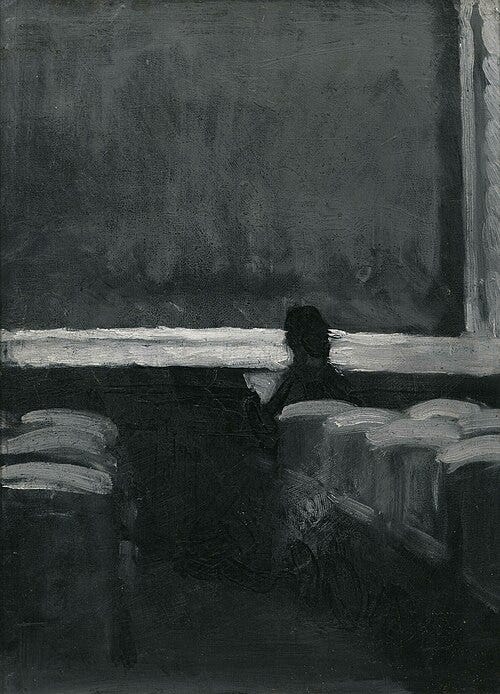
Denial, refusal, mutism, are gaps in the extreme forms in which the unease of culture presented itself.
—Enrique Vila-Matas, Bartleby & Co., trans. Jonathan Dunne
At lunch and in drama club I was loud, sarcastic, chatty, a performer. After school or ditching class, I tagged along with friends a grade or two above me to smoke pot and drive quiet roads in the woods behind the school. The more I smoked, the more I turned in on myself, growing anxious and quiet in the backseat. My mouth would go cottony and sour, my palms unpleasantly clammy. With the acrid smoke I exhaled after each hit, words dissipated. Language became strange and hazardous. I went mute, too stoned to utter more than jittery laughs.
People noticed. “Say something,” they’d laugh, and nudge me on the shoulder. Think of something to say, I’d beg myself, drawing blank after blank.
My incapacity for speech was excruciating. I kept smoking anyway.
Westerners are amazed at the simplicity of Japanese rooms, perceiving in them no more than ashen walls bereft of ornament. Their reaction is understandable, but it betrays a failure to comprehend the mystery of shadows.
—Jun’ichiro Tanizaki, In Praise of Shadows, trans. Thomas J. Harper & Edward G. Seidensticker
In musical notation, intervals of silence are called rests. In poetic lineation, pauses between lines and stanzas are called breaks.
There are things I cannot tell you.
Things I don’t want to tell you. Don’t want to tell myself.
Things I can never tell.

Is it enough to say only this?
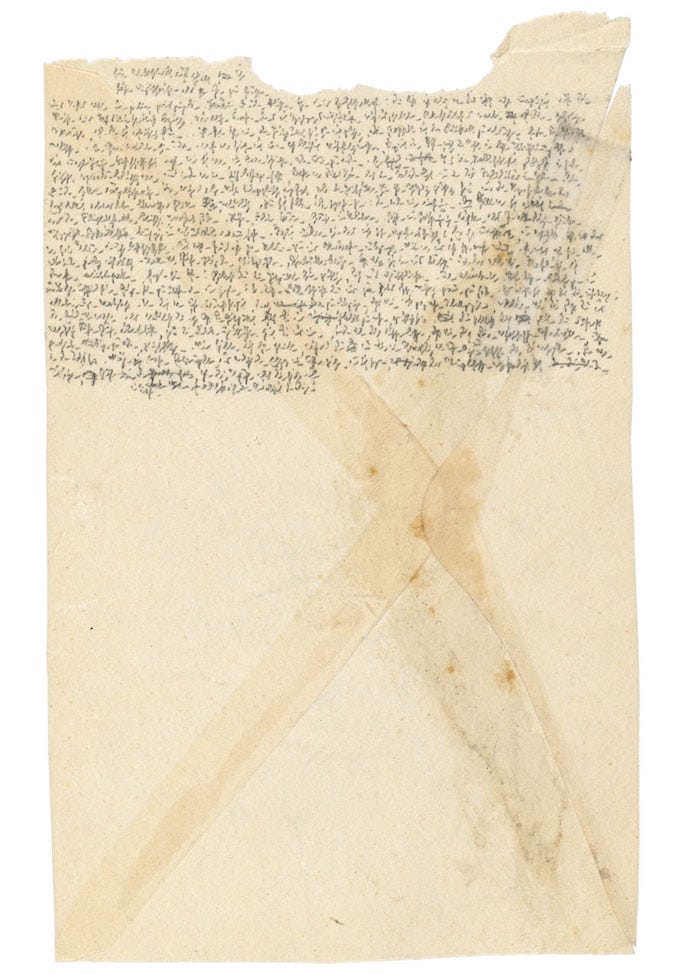
Things I wish I’d said, when I had the chance.
Where do unsaid things go?

Is it enough to say they’re solitary, imagined experiences?

Has a person ever lived leaving nothing unsaid?
What might they take back, given the chance.
The matrix of a poet’s work consists not only of what is there to be absorbed and worked on, but also what is missing, desaparecido, rendered unspeakable, thus unthinkable. It is through these invisible holes in reality that poetry makes its way—certainly for women and other marginalized subjects and for disempowered and colonized people generally, but ultimately for all who practice any art at its deeper levels. The impulse to create begins—often terribly and fearfully—in a tunnel of silence. Every real poem is the breaking of an existing silence, and the first question we might ask any poem is, What kind of voice is breaking silence, and what kind of silence is being broken?
And yet I need to say here that silence is not always or necessarily oppressive, it is not always or necessarily a denial or extinguishing of some reality. It can be fertilizing, it can bathe the imagination, it can, as in great open spaces—I think of those plains stretching far below the Hopi mesas in Arizona—be the nimbus of a way of life, a condition of vision. Such living silences are more and more endangered throughout the world, by commerce and appropriation.
—Adrienne Rich, “Arts of the Possible”
Senior year, I think. I’ve convinced our orchestra teacher to let me play the solo from George Gershwin’s “Summertime” on cello, in an arrangement for the school jazz band.2 I convince her because it’s a song my dad used to sing to me when I was a baby, and I want to surprise him.
I tell him about the concert, but don’t say anything about its significance, or give any hints about a surprise.
In a field
I am the absence
of field.
This is
always the case.
Wherever I am
I am what is missing.

—Mark Strand, “Keeping Things Whole”
I’m sitting in the first chair of the string section and the band is playing while I wait for the moment to start my solo. I’ve arranged all of this for one person and I’m looking for him in the audience, scanning the back wall of the cafeteria where the concert is taking place. I feel nervous, not about the solo, which is not a challenging one and anyway I’ve practiced, but about his absence from the room. Is he not there, or can I just not see him?
I glance up and see our orchestra teacher’s concerned face looking down at me from the conductor stand. I’ve missed my solo.
I look at the sheet music in front of me but I’m lost. I can’t tell what measure we’re on or where to come in. I stare at the sheet music while the band plays around me. The song ends, the concert is over and my dad isn’t there. He’s working, I find out later.
The orchestra teacher and I never talk about my missed solo. I don’t say anything to my parents about the solo. It’s the only school concert my dad misses.
Do not confuse it
with any kind of absence

—Adrienne Rich, “Cartographies of Silence”
I still have the cello. My dad bought it from a music store in San Jose recommended by my orchestra teacher. We drove up to look at their selection together. It was the most beautiful cello I’d ever seen, made with Chinese maple the color of rosewood, with gold flecks that caught the light and glowed like ember dust. It was also one of their more expensive models. It must have cost him several months of income.
When we left with the cello I was dumbstruck, and almost couldn’t believe it was mine.
It’s been stored in our garage for years now. I’ve thought about pulling it out to practice, or else donating it to someone who would play it. Once in a while I’ll consider playing again, joining a community orchestra or learning a new song.
But when I imagine opening the case and lifting out the cello, tightening the bow and tuning the strings, I stop there.
I could make excuses about lack of time, or being so long out of practice. The fact of the matter is the instrument stays in its case.
I could write you a thirteen-hundred page, that is to say, a very fat book about this if I wanted, but at least for the time being I don’t want to. Maybe later. Look forward to what might be coming, my friend, and until then, farewell.
—Robert Walser, Microscripts, trans. Susan Bernofsky
A riddle. “She’s a writer who doesn’t write,” my partner explains to his poet friend when we pick him up from the artist cooperative in Santa Cruz.
“What’s a writer who doesn’t write?” the poet replies with a grin. “A reader,” I answer from the backseat.
(Did I say this? Or only think it.)
January 9, 1937
Today I wrote nothing. Doesn’t matter.
—Daniil Kharms, “The Blue Notebook”, Today I Wrote Nothing: The Selected Writings of Daniil Kharms, trans. Matvei Yankelevich
There are things I want to tell myself that have been lost to memory, blacked out by forgetting.
Or else filed away somewhere, like records in a storage facility.
“Any documents that old would be in storage,” one court clerk tells me over the phone. “In an offsite storage facility. The District Attorney’s office doesn’t keep files that old on site.”
I often wonder about the people who linger over trash baskets at the corners of the city’s sidewalks. One sees them day and night, young and old, well dressed, in rags—often with shopping bags—picking over the trash. They pick out newspapers, envelopes. They discard things. I often wonder who they are and what they’re after. I approach and cannot ask them. Anyway, they scurry off. Sometimes I think they are writers who do not write. That “writers write” is meant to be self-evident. People like to say it. I find it is hardly ever true. Writers drink. Writers rant. Writers phone. Writers sleep. I have met very few writers who write at all.
—Renata Adler, Speedboat
What happens in the gap between what happened
and our memory of what happened?
I don’t want to talk about this.
I am tired of talking about this.
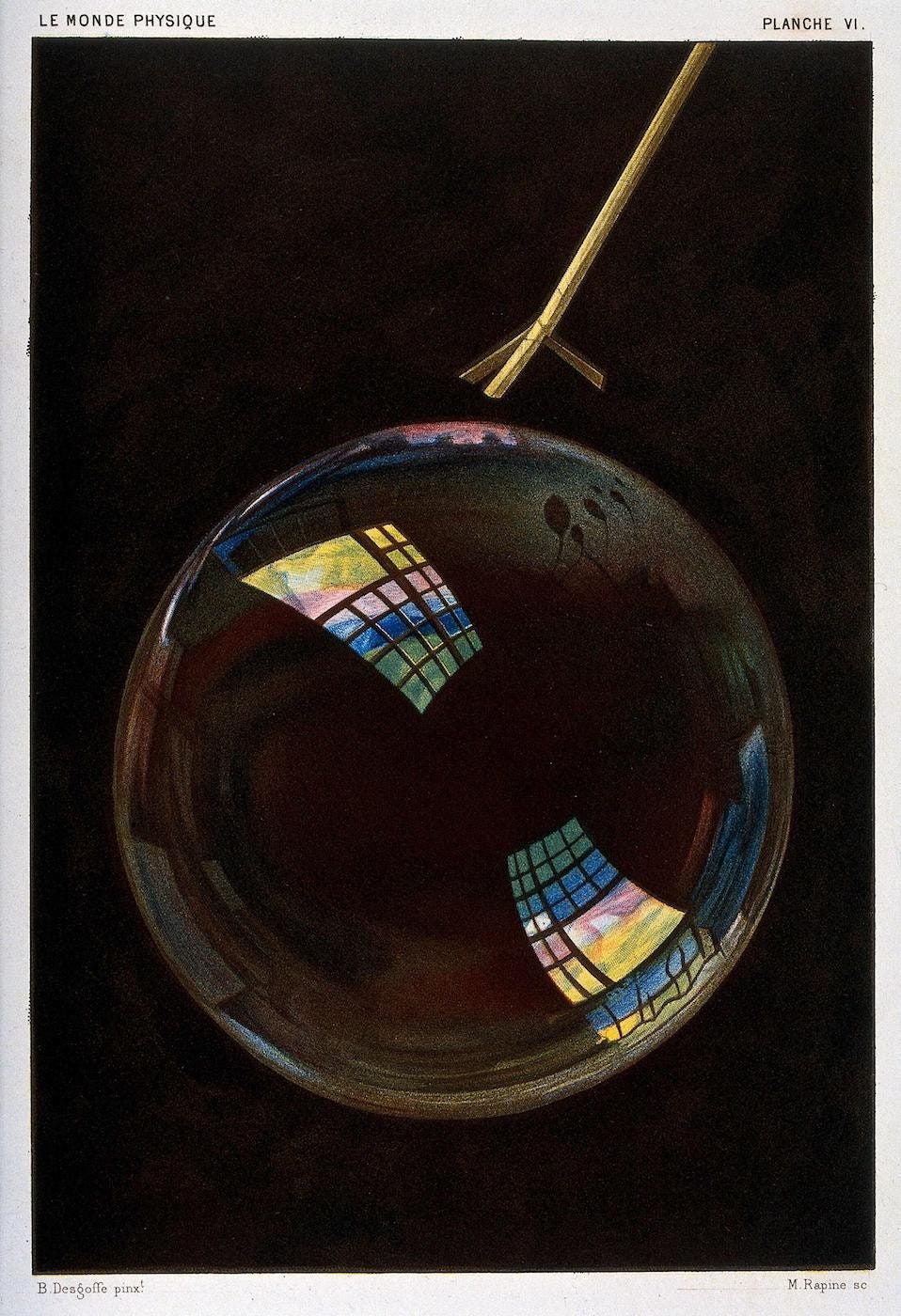
If Klara Whoryzek stopped writing, it was because—as she commented to her friend Paul Scheerbart—“even knowing that only writing would connect me like an Ariadne’s thread to my peers, I could not, however, make any of my friends read me, because the books I have envisaged during my days of literary silence are real soap-bubbles and are addressed to no-one, not even to the most intimate of my friends, so the most sensible thing I could do is what I have done: not write them.”
—Enrique Vila-Matas, Bartleby & Co., trans. Jonathan Dunne
It’s possible, likely perhaps, that there are no files to be retrieved from the storage facility.
No sorrow. No joy. No beginning. No end. No anger. No contentment. No memory. No dream. No past. No tomorrow. No sound. No silence. No war. No peace. No life. No death. No yes. No no. The waves have married the rock mosses on a distant shore, and I’ve just emerged from this marriage, which has lasted a million years. I emerged, but I didn’t know where I was. I didn’t know my name, or the name of this place. I didn’t know that I had the power to unsheathe one of my ribs and uncover a script for the dialogue of this absolute silence. What is my name? Who gave me my name? Who is going to call me Adam?
—Mahmoud Darwish, Memory for Forgetfulness: August, Beirut, 1982, trans. Ibrahim Muhawi
Fill in the blank. Filling out the document request form, I struggle to articulate my role in the case. I lack a word for it.
Instead I summarize my participation in the trial, write down only that I testified in court.
A unit is lacking. An omission, a blank, a void that nobody but him knows about, thinks about, that, flagrantly, nobody wants to know or think about. A missing link.
—Georges Perec, A Void, trans. Gilbert Adair
The phone is quiet while a court clerk fulfills my document search request.
I listen to her clicks and keystrokes as she enters information into a computer.
“Were you the victim?” she inquires.
A word of uncertain origin. In the medieval period a victim was a sacrificial animal or offering. The etymology is obscure, though it may be related to vicis, Latin for “change, exchange, or substitute”—as in vicarious—and possibly also to weihs, Gothic for “holy.”
Through sacrifice, the victim is consecrated, transformed into symbolic object, to the benefit of ritual participants. A noun, that is, defined by a relationship of event.
A confession. Why hasn’t it occurred to me before? This clean, simple phrasing. Why have I never put it this way?
She is waiting on the line. There is only one answer, and I don’t want to give it.
“Yes,” I breathe into the phone.
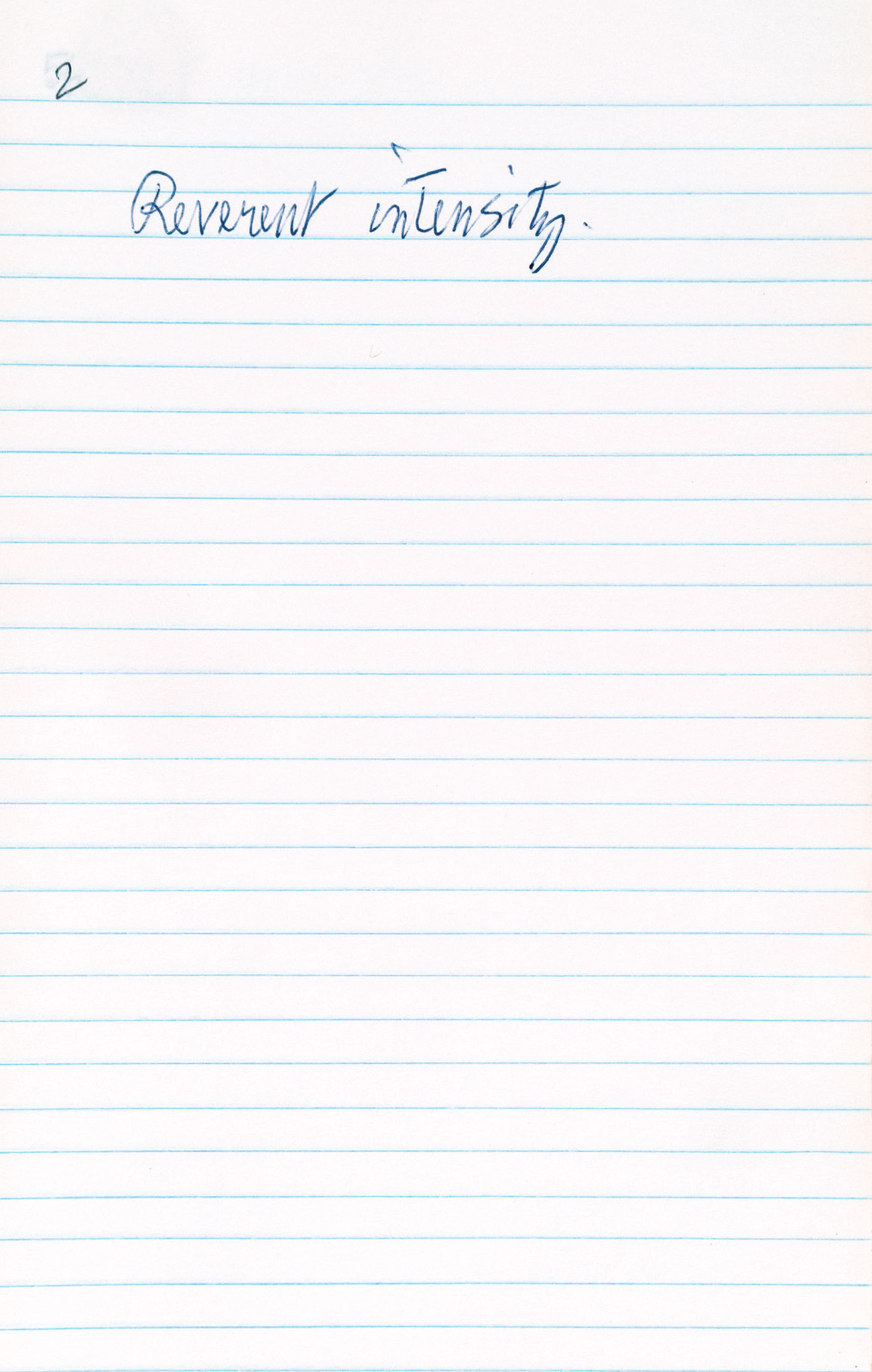
I ask you to fight against your own disappearance. To refuse to self-immolate. Or to launch yourself as a burning, glorious spectacle into outer space. To scratch yourself out and begin again, to die and resurrect.
—Kate Zambreno, Heroines
As long as we’re living the heart is unquiet, raps its incessant, iambic knock.
Until it stutters, stops.
At this moment I have so many fundamental thoughts, so many truly metaphysical things to say that I feel suddenly tired and decide not to write anymore, not to think anymore, but to let the fever of saying lull me to sleep whilst, with closed eyes, I gently stroke as I would a cat all the things I might have said.
—Fernando Pessoa, The Book of Disquiet, trans. Margaret Jull Costa
What’s a door doing here.3 The last time I spoke to my mom was over the phone. She was sitting at the kitchen counter, I later surmised, in my parents’ home in Oklahoma, and I was sitting in the reading chair by my desk.
I told her about the newly developing carpal tunnel in my right hand, and we discussed acupuncture and health for a while. I mentioned an article I’d read about the interstitium, a recently discovered organ comprising a webby matrix of connective tissue and interstitial fluid between the organs of the body.
We were still talking in that vein when she broke off in the middle of a sentence to handle something on the stove, then we said goodbye and got off the phone for, as it turned out, the last time.
“Oh—” she said, “my water’s boiling over. Gotta go, I’ll talk to you later.”
Silence, musical by an effect of resonance. The last syllable of the last word, or the last noise, like a held note.
—Robert Bresson, Notes on the Cinematograph, trans. Jonathan Griffin
If you enjoyed this post you might like...


readings
John Cage, Silence: Lectures and Writings, Wesleyan University Press, 1973
Mahmoud Darwish, Memory for Forgetfulness: August, Beirut, 1982, trans. Ibrahim Muhawi, University of California Press, 1995
Georges Perec, A Void, trans. Gilbert Adair, Harvill, 1994
Adrienne Rich, Arts of the Possible: Essays and Conversations, Norton, 2001
Susan Sontag, Styles of Radical Will, Picador, 2002
Jun’ichiro Tanizaki, In Praise of Shadows, trans. Thomas J. Harper & Edward G. Seidensticker, Leete’s Island Books, 1977
Enrique Vila-Matas, Bartleby & Co., trans. Jonathan Dunne, New Directions, 2000
Robert Walser, Microscripts, trans. Susan Bernofsky, New Directions/Christine Burgin, 2012
From Mark Rothko: A Biography by James Breslin.
From Gershwin’s popular 1935 folk opera Porgy and Bess, which was inspired by the1927 stage play adapted from DuBose Heyward’s novel by the author’s wife, Dorothy Heyward. The song lyrics were written by Heyward, while the melody closely resembles the African American spiritual “Sometimes I Feel Like a Motherless Child.”
From the concluding monologue of Samuel Beckett’s The Unnamable: “…quick now and try again, with the words that remain, try what, I don’t know, I’ve forgotten, it doesn’t matter, I never knew, to have them carry me into my story, the words that remain, my old story, which I’ve forgotten, far from here, through the noise, through the door, into the silence, that must be it, it’s too late, perhaps it’s too late, perhaps they have, how would I know, in the silence you don’t know, perhaps it’s the door, perhaps I’m at the door, that would surprise me, perhaps it’s I, perhaps somewhere or other it was I, I can depart, all this time I’ve journeyed without knowing it, it’s I now at the door, what door, what’s a door doing here, it’s the last words, the true last, or it’s the murmurs, the murmurs are coming, I know that well, no, not even that, you talk of murmurs, distant cries, as long as you can talk, you talk of them before and you talk of them after, more lies, it will be the silence, the one that doesn’t last, spent listening, spent waiting, for it to be broken, for the voice to break it, perhaps there’s no other, I don’t know, it’s not worth having, that’s all I know, it’s not I, that’s all I know, it’s not mine, it’s the only one I ever had, that’s a lie, I must have had the other, the one that lasts, but it didn’t last, I don’t understand, that is to say it did, it still lasts, I’m still in it, I left myself behind in it, I’m waiting for me there, no, there you don’t wait, you don’t listen, I don’t know, perhaps it’s a dream, all a dream, that would surprise me, I’ll wake, in the silence, and never sleep again, it will be I, or dream, dream again, dream of a silence, a dream silence, full of murmurs, I don’t know, that’s all words, never wake, all words, there’s nothing else, you must go on, that’s all I know, they’re going to stop, I know that well, I can feel it, they’re going to abandon me, it will be the silence, for a moment, a good few moments, or it will be mine, the lasting one, that didn’t last, that still lasts, it will be I, you must go on, I can’t go on, you must go on, I’ll go on, you must say words, as long as there are any, until they find me, until they say me, strange pain, strange sin, you must go on, perhaps it’s done already, perhaps they have said me already, perhaps they have carried me to the threshold of my story, before the door that opens on my story, that would surprise me, if it opens, it will be I, it will be the silence, where I am, I don’t know, I’ll never know, in the silence you don’t know, you must go on, I can’t go on, I’ll go on.”
The final novel in Beckett’s minimalist trilogy, it was originally written in French and translated by the author into English.