
on planes
language and displacement

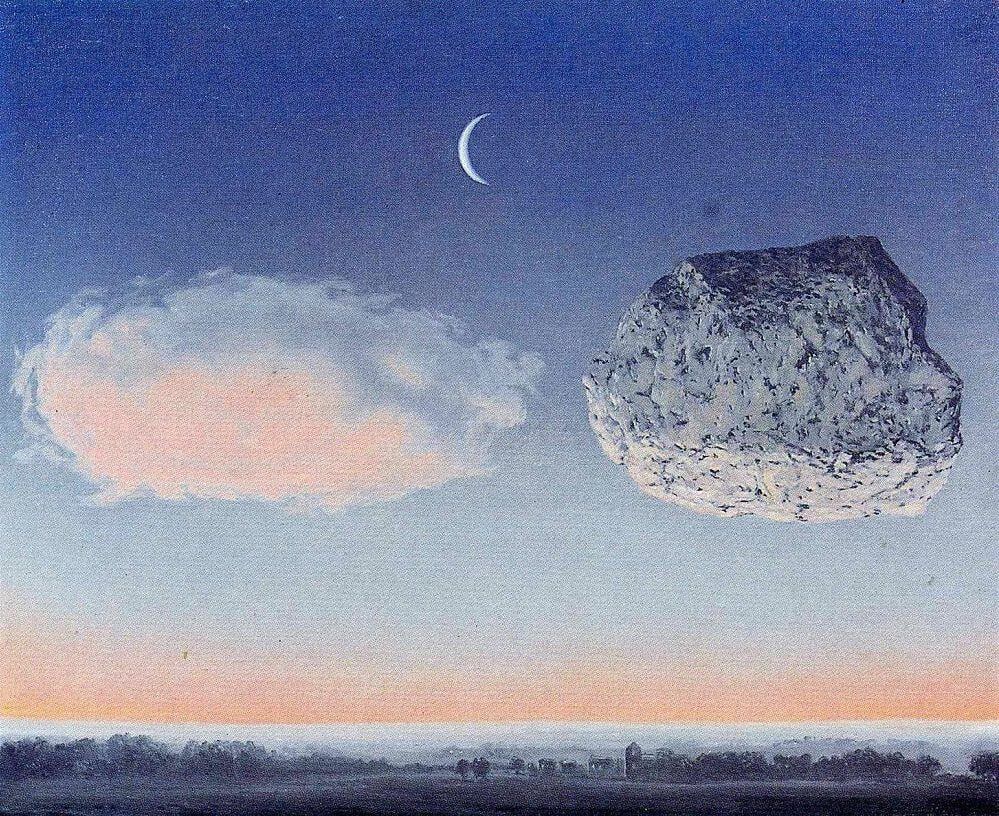
I’m sure that I haven’t seen most of the really important things that happen in this city. To see the things that matter, you have to feel that you want to stay. Cities shroud themselves from those who’re just passing through.
―Anna Seghers, Transit (trans. Margot Bettauer Dembo)
Sway, go on, move. That’s the only way to get away from him. He who rules the world has no power over movement and knows that our body in motion is holy, and only then can you escape him, once you’ve taken off.
—Olga Tokarczuk, Flights (trans. Jennifer Croft)
Say you’re taking a trip. This could be an afternoon at a café, a day at the beach, a weekend in the mountains or a nearby town, a week visiting family for the holidays, a two-week (or longer) vacation in a foreign country. Which items will you invariably pack in your tote or duffle bag or rolling luggage? Most travelers will answer with some personal combination of portable items from our universal modern inventory: keys, wallet, passport, cell phone, laptop or tablet, supplementary digital devices and accessories, prescription and over-the-counter medications, sunglasses or eyeglasses or reading glasses, a book or magazine, an in-progress craft or knitting project, an eye mask and ear plugs and ergonomic neck pillow, a light sweater or cardigan in case of a chill, lip balm and cosmetic products, perhaps a snack, probably a beverage. Less reasonable members of society will add to this list, out of compulsive or neurotic attachment to some nostalgic token or current obsession: a security blanket or tarot deck or healing crystal or harmonica or lucky rabbit’s foot. The notetaker will bring at the very least a pocket notebook and pen, but more likely she’ll stow an assortment of indispensable writing utensils and travel journals in her carry-on bag, along with half a dozen or more reading copies selected from her shelf—well-handled trade editions whose creased spines and thumbed corners intimate previous journeys—and chosen for a congruence of setting, theme, and (ideally, though still negotiable) slightness. She does this because, the notetaker will tell you, packing light is a fool’s errand and, as the proverb cautions, the cost of flight is loneliness.1
It is hard to get heavy objects up into the air; a strong desire to do so is necessary, and a strong driving force to keep them aloft. Some poets sit in airplanes on the ground, raising their arms, sure that they’re flying. Some poems ascend for a period of time, then come down again; we have a great many stranded planes.
—Elizabeth Bishop2
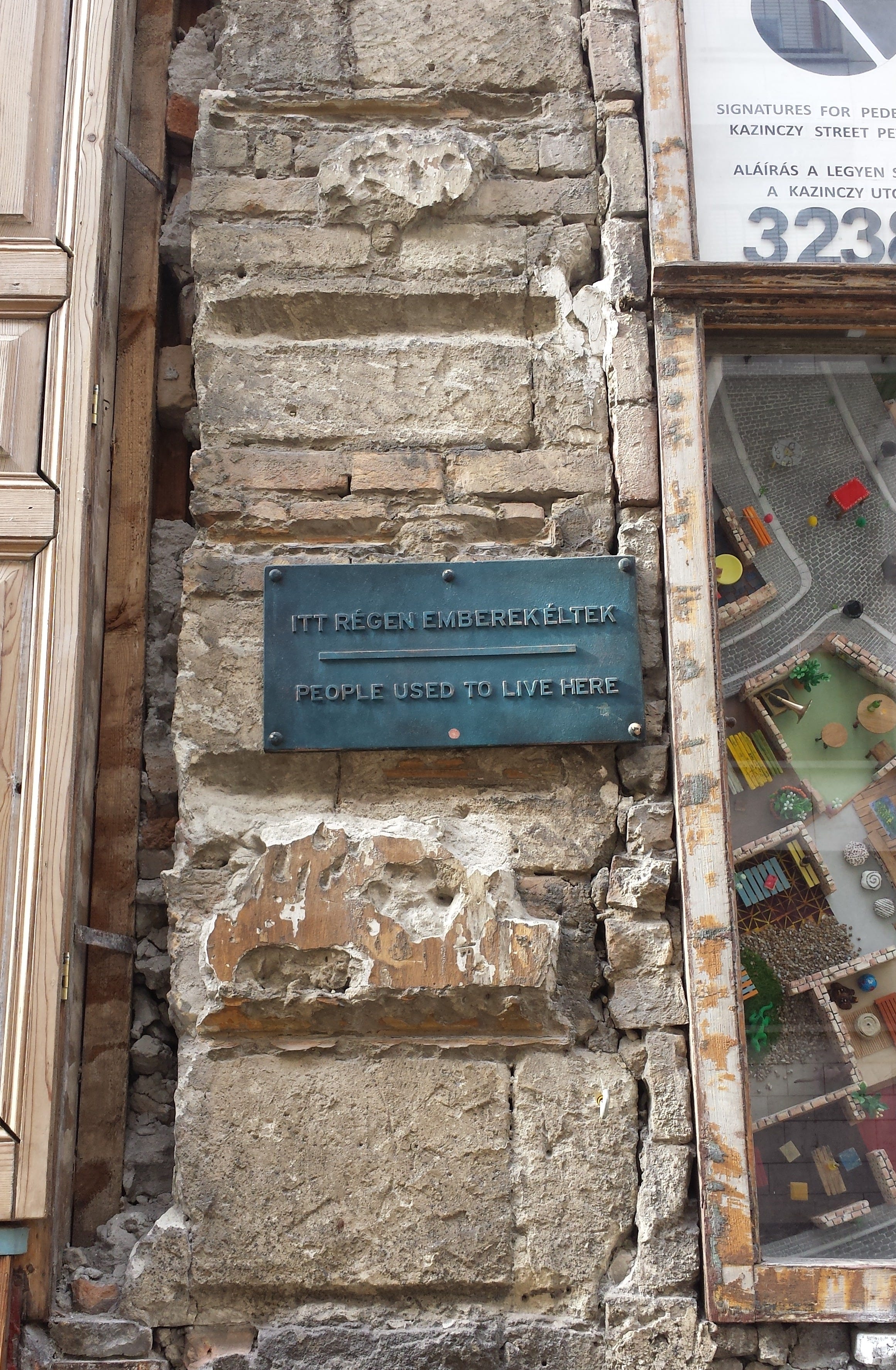
In 1943 the poet Avrom Sutzkever escaped from the Vilna Ghetto with his wife Freydke. The couple hid in the nearby forest, fighting Nazi forces with the resistance until the Jewish Anti-Fascist Committee in Moscow sent a rescue plane for them; but to reach it, the couple had to negotiate a minefield. “Sutzkever solved the problem by crossing it in meter,” explains Mark Glanville, quoting the poet: “‘Sometimes I walked in anapests, sometimes in amphibrachs.’” After the war he would emigrate to Palestine, and live in Israel until his death in 2010.3
In the fall of 2016 I spent three weeks traveling through Eastern Europe with my partner, ending with a week in Paris before our return home. For reading material we packed books by authors from each country on our itinerary to read in their corresponding localities: Bohumil Hrabal in Czech Republic, Max Blecher in Romania, Magda Szabó in Hungary, Tadeusz Konwicki in Poland, Robert Walser in Switzerland, Hélène Cixous in France.4 The books were all English translations, their original meanings carried over into a foreign language; not unlike the airplane that had carried us over the Atlantic, translocating us to a foreign landscape. We were doubly tourists: reading each author in our own native language while visiting their museums and cemeteries and neighborhood pubs, taking pictures of their bridges and swans and graffiti, passing through buildings and over cobbled streets like ghosts.
The plane moves so fast in the blue shadow of the setting sun that dusk stretches across us through the whole hemisphere and we are suspended in this cobalt zone for hours. It never gets dark.
In an airplane, few people are conscious of the physical, absolutely concrete fact of flight. Commercial aircraft—with their minute windows and seats that recline just a few stingy degrees—bear no relationship to the essential nature of what man first glimpsed in the flight of birds. Everyone on board—the fat, the sleepless, the children with short attention spans and bursting eardrums, the hysterical, the Xanax addicts—attempts to ignore the fact, at once beautiful and terrifying, that their bodies are suspended in midair. The food is served, the film begins, and the air hostess asks for the plastic blinds to be lowered. Only if we open the blind in an act of rebellion against the dictatorship of the cabin crew, can we see the world there below and, for an instant, comprehend where we are. Viewed from above, that world is immense but attainable, as if it were a map of itself, a lighter and more easily apprehended analogy.
—Valeria Luiselli, “Flying Home,” Sidewalks (trans. Christina MacSweeney)
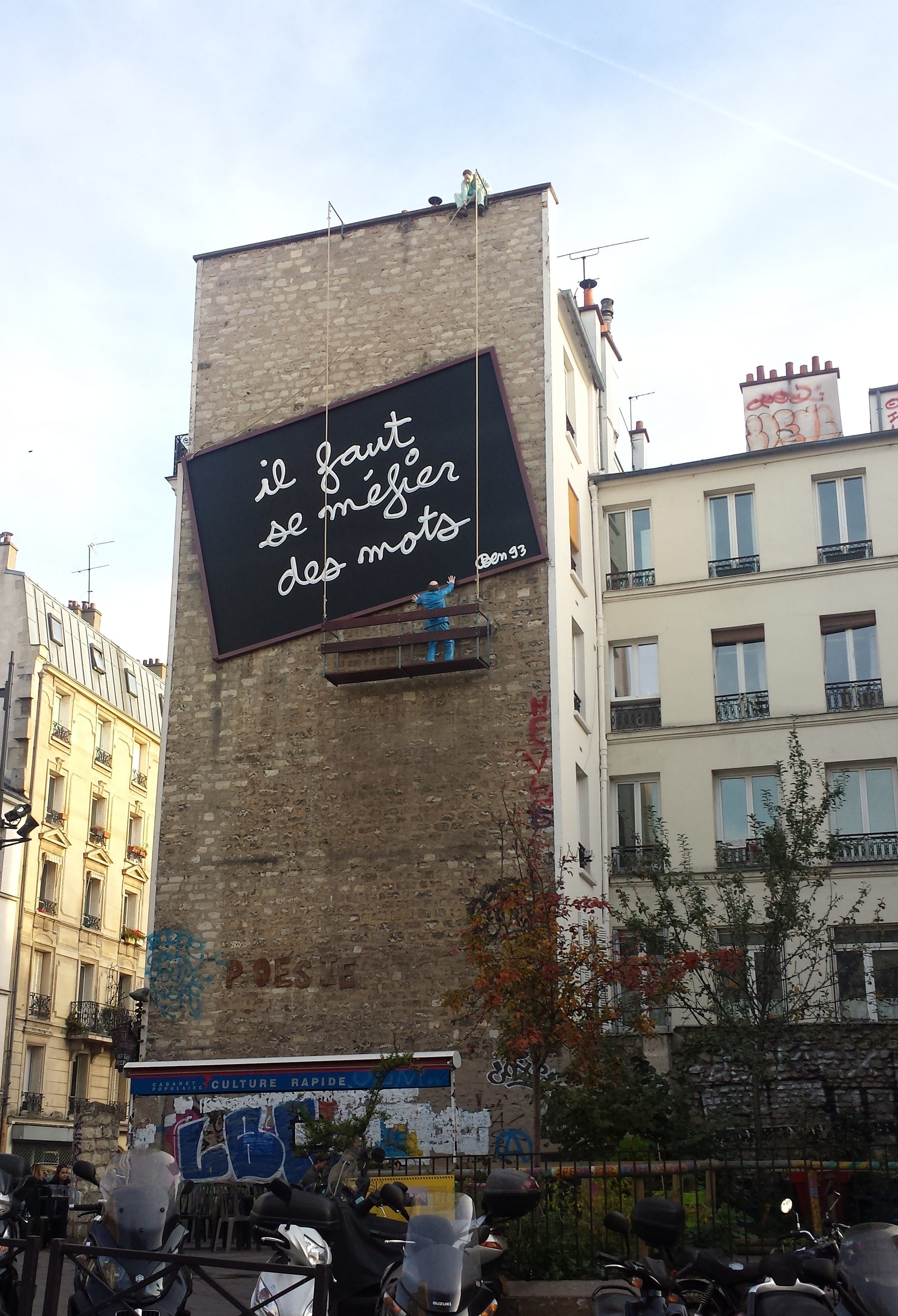
I turned thirty in Gdańsk, where we spent the day at the Solidarity museum and at night rode a massive brightly lit ferris wheel on a picturesque waterway that looked like it could have been in Amsterdam. We’d driven up to the Baltic Coast in a rented car that at one juncture had to be ferried across a river, and would later run out of gas on our way to the airport in Warsaw. Overestimating the gas tank capacity of the European car model, and perhaps also miscalculating the remaining kilometers of our drive, we’d be forced to pull off the highway on the outskirts of the Polish capital and hitchhike to the nearest petrol station.
When you’re traveling you have to take care of yourself in order to get by, you have to keep an eye on yourself and your place in the world. It means concentrating on yourself, thinking about yourself and looking after yourself. So when you’re traveling all you really encounter is yourself, as if that were the whole point of it. When you’re at home you simply are, you don’t have to struggle with anything or achieve anything. You don’t have to worry about railway connections and timetables, you don’t need to experience any thrills or disappointments. You can put yourself to one side—and that’s when you see the most.
She said something like that and fell silent. It surprised me, because Marta has never been further than Wambierzyce, Nowa Ruda and Wałbrzych.
—Olga Tokarczuk, House of Day, House of Night (trans. Antonia Lloyd-Jones)
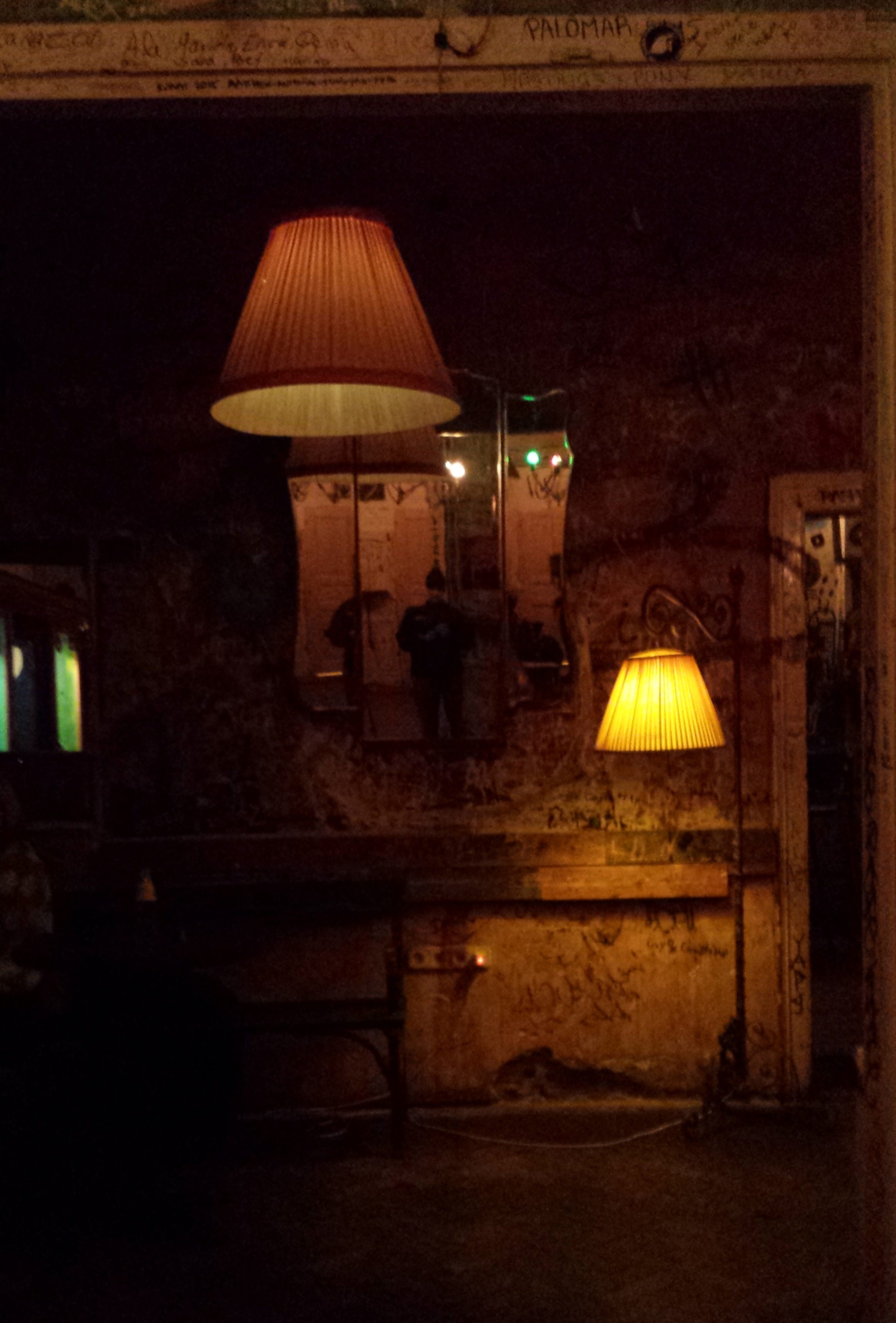
On the balcony facing the inner yard, drinking coffee, yesterday’s cup still here, forgotten, an old woman across the yard, one floor below, comes out perpendicular to our balcony and brushes a small rug, hanging it over the edge in her pink bathrobe and hair long out of curlers. She notices me before going back into her apartment. Is she more surprised to see an unfamiliar person here or to see that I’m writing in a notebook? Maybe she isn’t surprised at all after so many years of things seen. It is 9:24 a.m., she is cleaning her apartment, there is construction noise nearby, and I am here admiring the yellow hose that’s been draped across the grass below for two days. Now that the weekend is over everyone is going to work, it seems. The gardener may come, remove the hose even. Another old woman on her balcony, across from ours, watering her flowers in her nightgown. Perhaps the entire building is tenanted by old women. In which case pink bathrobe was right to be surprised by my presence. Although I am wearing sweatpants, hair tousled. Today I’m going to the Louvre, but I’m not in a hurry.
The occupants of the first car that stopped to help would drive off once they determined we spoke practically no Polish, but the driver of the second car would speak enough English to understand our situation and agree to take us to find some gas. His passengers knew as much English as we did Polish, and would consult together in their own language about which exit would offer a petrol station, how to navigate the intersecting freeways and arrive back on the same side of the highway where we’d left the car, and other inscrutable topics. By the time we’d locate a station and purchase a small jerrycan of fuel, change freeways three times and arrive back at the car, we would no longer be able to make our flight to Basel. Apparently reading my disappointment, the white-haired man sharing the backseat with me would reach into his briefcase and hand me a wrapped piece of candy with an apologetic smile. When I’d try to hand the driver some złotys to remunerate him for his trouble he would refuse, and we would thank the group of Polish businessmen and watch their car drive off before getting back into our own.
Whenever I set off on any sort of journey I fall off the radar. No one knows where I am. At the point I departed from? Or at the point I’m headed to? Can there be an in-between? Am I like that lost day when you fly east, and that regained night that comes from going west? Am I subject to that much-lauded law of quantum physics that states that a particle may exist in two places at once? Or to a different law that hasn’t been demonstrated and that we haven’t even thought of yet that says that you can doubly not exist in the same place?
I think there are a lot of people like me. Who aren’t around, who’ve disappeared. They show up all of a sudden in the arrivals terminal and start to exist when the immigrations officers stamp their passport, or when the polite receptionist at whatever hotel hands over their key. By now they must have become aware of their own instability and dependence upon places, times of day, on language or on a city and its atmosphere. Fluidity, mobility, illusoriness—these are precisely the qualities that make us civilized. Barbarians don’t travel. They simply go to destinations or conduct raids.
—Olga Tokarczuk, Flights (trans. Jennifer Croft)
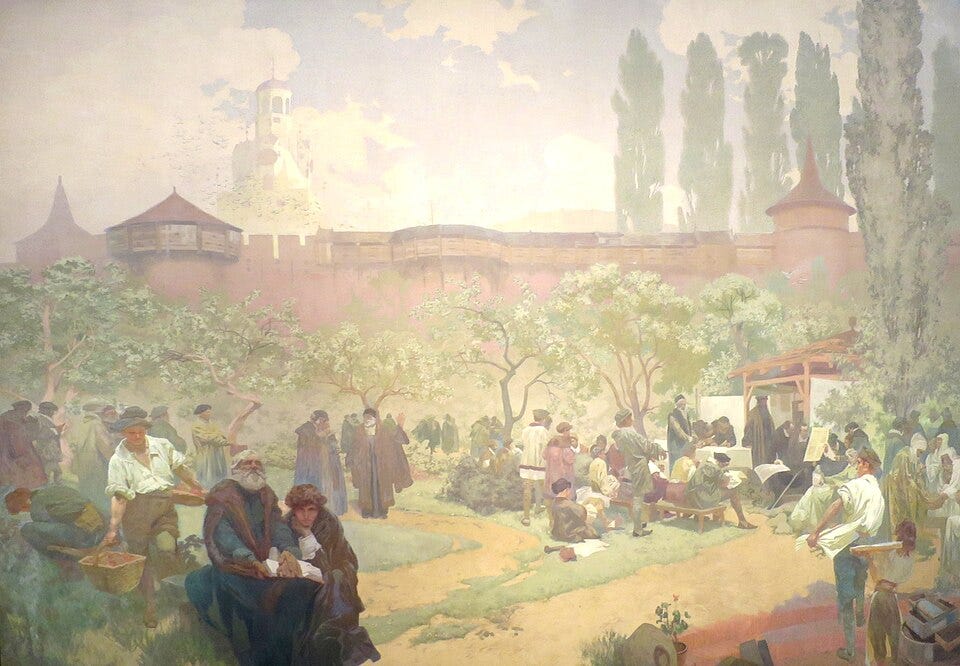
Evening train to Brno, through towns with exposed crumbles of brick buildings, mustard fields, stands of trees, and woods. Rain clouds resembling Vermeer sky, cold Northern moods flashing across a pale blue space. Spots of Mucha pastels, Slavic sun gold points hovering over the damp world. Farm acres spread across quilted terrain. Everything crumbling into the same colors—ochre, pistachio, egg shell, mustard, periwinkle, straw, and hay. Land is tame here. It’s as if a few millennia of people said quietly to the land, “Czech Republic, Czech Republic, Czech Republic” and eventually it settled in to be this place. Wheat fields, linden trees, caves. (Of course it was not always the Czech Republic, or even Czechoslovakia, but maybe it doesn’t take so long for a land to learn its language.)
In Hungary we drove another rented car from Budapest to the home of some strangers who knew a friend we were visiting in Romania, and had graciously agreed to let us park our rental in their yard—the insurance didn’t cover international mileage—while we stayed for a few days with her in a predominantly Hungarian village on the other side of the border. Her friends opened their gate and guided us down their driveway the night we arrived, and we exchanged monosyllabic greetings limited by our equally rudimentary grasp of each other’s languages. We climbed into our friend’s car and taxied to her home, where we met her husband (who also spoke very little English) and her three children (who spoke none; “Why don’t they speak in Hungarian?” our friend, laughing, translated her eldest daughter’s plaintive inquiry). Our host took us to the local historical landmarks and cafés, and we accompanied her and the kids on evening walks along field roads and cracked homegrown black walnuts on their doorstep with a joiners’ hammer, until it was time for us to go and she ushered us back to her native country, sending us off with a souvenir flask of high proof homemade pálinka.
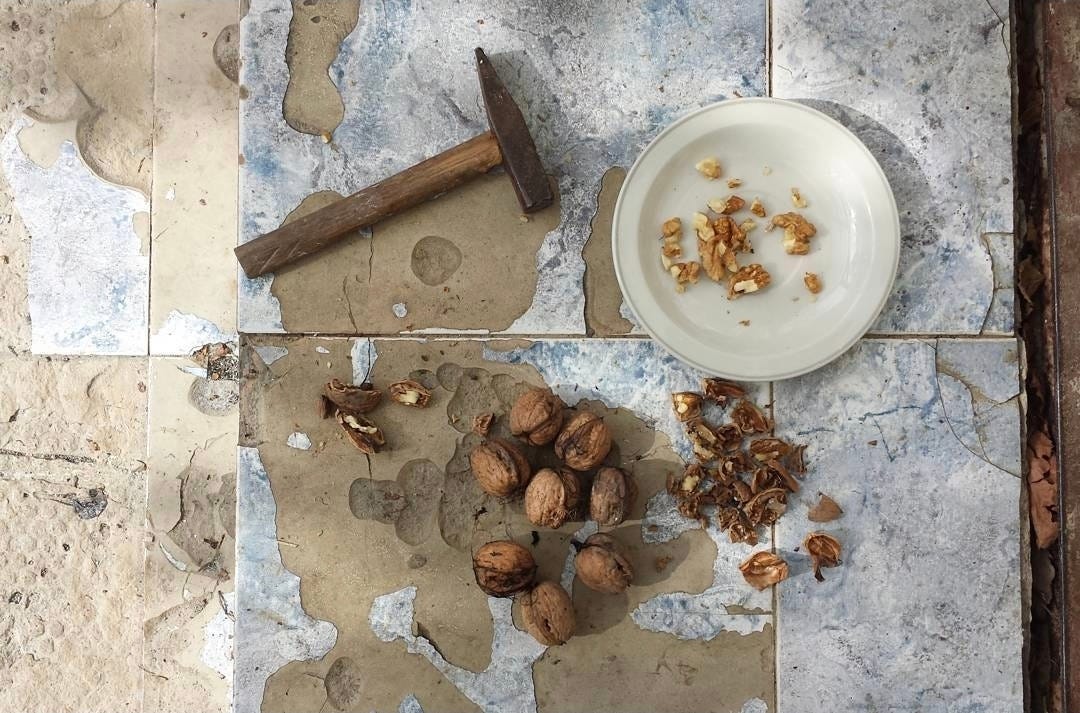
…have walnuts in their pockets: One day, during the war, I was asked to find an empty strip of land on the plateau de Valensole where Allied planes in difficulty could land. I find a large field that fits the bill but there’s a magnificent three-hundred-year-old walnut tree in the middle of it. The owner of the field was willing to rent it to me, but stubbornly refused to cut down the beautiful tree. I eventually told him why we needed the land, whereupon he agreed. We start clearing away the soil around the base of the tree; we follow the taproot….At the end of the root, we find the bones of a knight buried in his armor. The man must have been a mediaeval knight…and he had a walnut in his pocket when he was killed, for the base of the taproot was exactly level with his thigh-bone. The walnut tree had sprouted in the grave.
—René Char, Hypnos (trans. Mark Hutchinson)
A woman drinks champagne and smokes, standing over a barrel that serves as an outside table, ashing in the ashtray and clearing her throat. She looks like the same woman who was reading the newspaper here a few days ago. Short, dyed blonde hair with bangs, around 60 or 70, maybe. Are there regulars here? Two men playing cards at a table, an elderly gentleman here and there, in a newsboy cap and glasses. One of them smokes tobacco from a pipe. Real life, or something like it. Places full of tourists have an unreal feeling, not fake, not bad, really, but not self-sustaining. When the tourists go home they are empty, dead, dormant. But the places where people live are less needy. They breathe, and go on without crowds, quietly, peacefully going about their business, not calling for attention. They have their own little center of gravity, like the barrels with ashtrays where regulars hover, reading or smoking, and that is all the sign they will give out for anyone to notice or be drawn to.
Without cafés and newspapers, it would be difficult to travel. A paper printed in our own language, a place to rub shoulders with others in the evenings enables us to imitate the familiar gestures of the man we were at home, who, seen from a distance, seems so much a stranger. For what gives value to travel is fear. It breaks down a kind of inner structure we have. One can no longer cheat—hide behind the hours spent at the office or at the plant (those hours we protest so loudly, which protect us so well from the pain of being alone). I have always wanted to write novels in which my heroes would say: “What would I do without the office?” or again: “My wife has died, but fortunately I have all these orders to fill for tomorrow.” Travel robs us of such refuge. Far from our own people, our own language, stripped of all our props, deprived of our masks (one doesn’t know the fare on the streetcars, or anything else), we are completely on the surface of ourselves. But also, soul-sick, we restore to every being and every object its miraculous value. A woman dancing without a thought in her head, a bottle on a table, glimpsed behind a curtain: each image becomes a symbol. The whole of life seems reflected in it, insofar as it summarizes our own life at the moment. When we are aware of every gift, the contradictory intoxications we can enjoy (including that of lucidity) are indescribable. Never perhaps has any land but the Mediterranean carried me so far from myself and yet so near.
—Albert Camus, “Love of Life,” Personal Writings (trans. Ellen Conroy Kennedy and Justin O’Brien)
On the RER train to de Gaule Airport an older woman and middle-aged man enter our car with two speakers mounted on wheeled dollies that they tow behind them. The woman sings Spanish love songs accompanied by tinny karaoke music that plays from the speakers. She fails to captivate an impassive audience made up of solitary travelers, each sitting alone on separate benches in the car, focused on their phone screens, or the passing landscape beyond the windows. No one meets the singer’s roaming glances, and some seem already inconvenienced by the tacit understanding of what comes next: a paper donation cup used well beyond its purpose, folded, creased and worn in places, especially the rim, which has become discolored and frayed. After two songs she produces it from the inner folds of her fall coat and paces down the aisle of seats requesting payment from an unwilling, sparse group of chilly faces that respond almost unanimously with a negative shake, left and right, of downcast eyes. She reaches me and I repeat the gestures of rejection. I am out of cash and have nothing to offer. She purses her lips in disapproval and sits down on a bench across from mine to share her take with her quiet partner. A few coins from one or two guilty parties. The two entrepreneurs sit in what seems like cynical resignation, or else in judgment of their ungenerous company. “Bon voyage” and “merci” still hanging, for the moment, in the corners of the singer’s mouth, like wrinkles.
—Never to have studied history in
the weak calligraphy of songbirds’ cages.
—And never to have had to listen to rain
so much like politicians’ speeches:
two hours of unrelenting oratory
and then a sudden golden silence
in which the traveler takes a notebook, writes:

“Is it lack of imagination that makes us come
to imagined places, not just stay at home?
Or could Pascal have been not entirely right
about just sitting quietly in one’s room?

Continent, city, country, society:
the choice is never wide and never free.
And here, or there…No. Should we have stayed at home,
wherever that may be?”

—Elizabeth Bishop, “Questions of Travel”
If you enjoyed this post you might like...


readings
Max Blecher, Adventures in Immediate Irreality, trans. Michael Henry Heim, New Directions, 2015.
Hélène Cixous, Manhattan: Letters from Prehistory, trans. Beverley Bie Brahic, Fordham University Press, 2007.
Michel Foucault, This is Not a Pipe, trans. James Harkness, University of California Press, 1983.
Bohumil Hrabal, Too Loud a Solitude, trans. Michael Henry Heim, Harcourt, 1992.
Tadeusz Konwicki, The Polish Complex, trans. Richard Lourie, Penguin, 1984.
Magda Szabó, The Door, trans. Len Rix, NYRB Classics, 2015.
Olga Tokarczuk, Flights, trans. Jennifer Croft, Fitzcarraldo, 2017.
Robert Walser, Looking at Pictures, trans. Susan Bernofsky, Lydia Davis and Christopher Middleton, New Directions, 2015.
“If you want to go fast, go alone; but if you want to go far, go together.” Though frequently cited as an African proverb, its origins remain unknown.
Written in her notebook around 1937. See Mark Ford’s essay for the London Review of Books, “Elizabeth Bishop’s Aviary.”
See “Life-saving Prosody: The Greatness of a Neglected Poet” by Mark Glanville, Times Literary Supplement, January 18, 2019.
All but one of these returned home with us. A mass market paperback copy of Tadeusz Konwicki’s The Polish Complex was regrettably left on the windowsill of a rented room in Łódź.
The Polish Complex takes place in the line outside of a Warsaw jewelry store on Christmas Eve, where the narrator (whose name is also Konwicki) waits to trade his cash for gold rings in an attempt to preserve its value in the shortage economy of 1970s Poland.
When we contemplate the whole globe as one great dewdrop, striped and dotted with continents and islands, flying through space with other stars all singing and shining together as one, the whole universe appears as an infinite storm of beauty. - John Muir